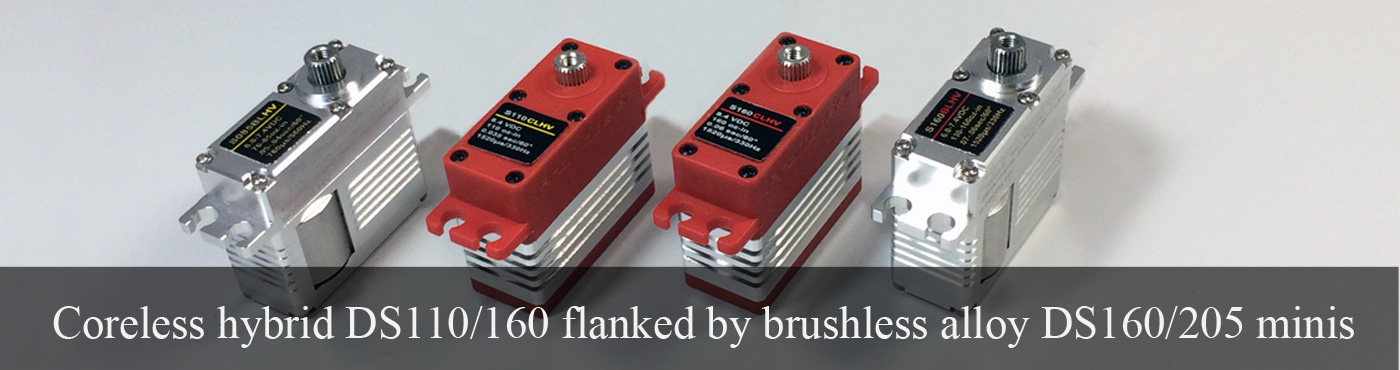
This DS110CLHV is one of 4 ProModeler mini-size digital servo alternatives. Sharing the same hybrid construction as the DS160CLHV, this one is rated at 110oz-in instead of 160oz-in. Featuring the same look due to hybrid (plastic/aluminum) construction, the 110 and 160 have coreless motors. Costlier alternatives in the mini-class include the 160BLHV and 205BLHV.
More expensive due to an all-aluminum case, these also have brushless motors and an up-rated gear train. Anyway, outputting 110 oz-in and transiting in 0.035 sec/60°, many pilots view this DS110CLHV as our best compromise of all possible features in the mini-class. Perhaps you will also.

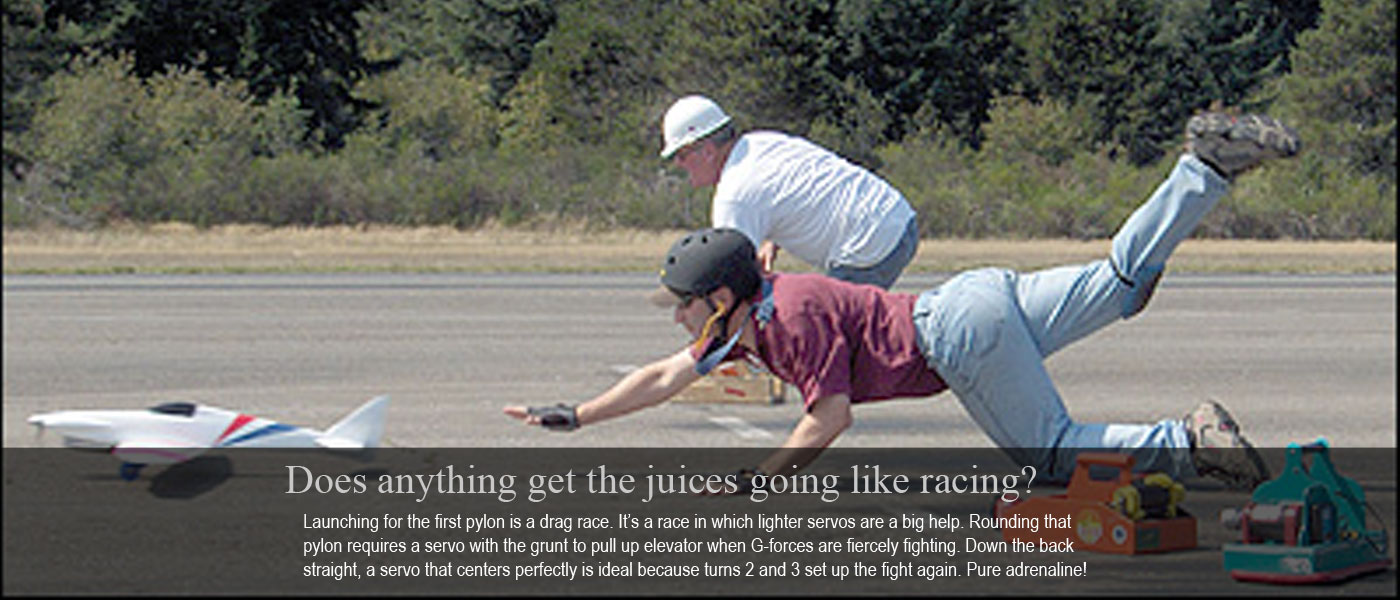
When is fast important? Maybe you're outfitting a 422 Q-40 or 426 Q500 pylon racer (because you're one of those God equipped with the superhuman reflexes). Or you're Jonesing a gyro equipped 60" class 3D model for the ultimate in low level aerobatic capability. Sure, 110oz-in is probably twice as much torque as you need, but the reason you want this servo is for 60°/0.035 seconds. Beyond über fast, it delivers when cutting inside a competitor at turn 1, or for executing a waterfall down to 6" before powering out. If you're seeking an edge . . . you've just found one!

Especially important for racing are servos built to an aerospace standard. For example, racing engines transmits power impulses throughout the air frame at 23K RPM. This intense vibration can kill servos. The DS110CLHV is tested to MIL-STANDARD 810G Test Method 514.6 (vibration), offering another edge hobby-grade servos can't deliver. How important is better vibration protection? Yeah, we think that way also.
What if you're outfitting a 500-class 3D-heli? Since cyclic-servos plug directly into a flybarless 3D-gyro - ahead of the receiver - this means corrective inputs are generated by the MEMS sensors (and significantly faster than human response). This is why top pilots use the fastest servos they can find. After all, performing piro-flips and tick-tocks so low the tail rotor nearly touches the ground means a crash happens in a flash so faster reacting servos may mean the difference between cheers, and an expensive dirt nap, right? Since there are three servos on the swashplate, one servo alone outputs more than your entire model weighs. This means 110oz-in is overkill. And since a faster servo means 3D maneuvers happen more quickly, this is the servo you want for maneuvers that stop and start in an instant. Plenty of torque, and faster means the rest of the features are icing on the cake because for you, it's all about better performance.
Ditto if you fly a 60" wingspan 3D electric down. Perhaps you want to torque roll so low you touch the tail wheel on the deck - at near zero airspeed so the forces are less important than convert thoughts into action lightning-quick or risking disastrously contacting terra firma. This is where speed counts and the DS110CLHV is the servo for your next model
With respect to centering, due to the genuine Japanese Nobel potentiometer (the best money can buy) along with MIL-SPEC components, you get the best centering in the industry. And since the case is made of CNC-machined aircraft aluminum - plus impact resistant engineering polymer reinforced with bronze bushings at the steel gear shafts pockets - you get lust-worthy light weight plus slop-free performance that endures season after season.

Better components. Better servos. The formula is simple. Decisions regarding what go into ProModeler servos aren't made in accounting to optimize price and profit, but in engineering. The reasonable price comes about because we reject the importer + distributor + hobby dealers business-model because they each get a cut at your expense. With ProModeler you're cutting out the middlemen by dealing direct.
Note: operating voltage is 4.8-8.4V, but optimal performance is obtained with a 2S LiPo instead of a BEC. This is because LiPos deliver the required current without voltage spikes, noise, or otherwise adversely affecting the delicate avionics (25C or better is recommended). After all, synthetic orange colored Tang may have gone to the moon, but it doesn't compare to freshly squeezed orange juice. Same thing when it comes to feeding your avionics!
Mechanical Details:
The foundation is the center case that's made from a solid billet of 6061-T6 aircraft aluminum. It's CNC-machined with cooling fins for better cooling. The upper and lower case components are injection molded of impact resistant nylon 6.6 (a fiber-filled engineering polymer like what's used in Glock handgun frames). In the interest of durability, plastic case components are further reinforced with bronze bushings (at the pockets where the steel gear shafts fit). So as not to reinvent the wheel, the output shaft spline is 25T (Futaba-compatible). For durability, the gear train is all metal, and it's equipped with dual ball bearings. For protection against destructive vibration, the PCB (printed circuit board) is coated with epoxy potting compound. The entire assembly is sealed against the elements with thirteen (13) Buna-N synthetic O-rings. Finally, while there are ten (10) screws in the assembly, for increased rigidity, the upper case (the one housing the gears, e.g. the transmission section) is secured with six (6) screws instead of four. Moreover, you get hardened (grade 12.9) Allen-head M2 socket cap screws instead of Phillips.
Other Resources
Specifications (performance, mechanical, electrical, and line drawings) are contained within the Specs TAB and if you're curious how this servo matches up to competing products, check out the Comparison TAB where we help with your homework.
Last thing, if you're a 3D pilot and you'll trade off some speed for a bunch more torque, then consider our DS160CLHV (160oz-in vs. 110oz-in) because it transits in a mere 0.06sec/60°, which is plenty fast by pretty much any measure. Especially considering we are only competing with ourselves because the other brands can't! Finally, if brushless motor digital servos are more your cup of tea, then you may wish to consider our DS160BLHV and DS085BLHV (this last one is 760μs neutral so it's for tail rotor gyroscopes only). With bullet-proof all-aluminum construction, these servos may better suit you needs.
Note:
These are mini-size servos with very small gears and operating them manually via the servo horn may damage them. This damage is not covered by warranty. Please do not treat these like a standard size servos. You've been warned. Also, operating voltage is 4.8-8.4V, but optimal performance is obtained with a 2S LiPo instead of a BEC. This is because LiPos deliver the required current without voltage spikes, noise, or otherwise adversely affecting the delicate avionics (15C or better is recommended). After all, synthetic orange colored Tang may have gone to the moon, but it doesn't compare to freshly squeezed orange juice. Same thing when it comes to feeding your avionics!
Servos are not designed for people to zing-zing them back and forth using a servo arm. Doing this may damage the gear train. Reason being, the transmission is comprised of gears designed to take the force of a weak motor, multiply it many times until we get to the final drive ratio. Way it works is individual gears are designed so that a small pinion drives a larger bull. This happens in a ratio ranging from 1:3 to 1:6 through a series of combo gears to reach the final ratio, which can vary from 1:150 to over 1:500.
Thus, grabbing the servo arm and moving it back and forth isn't just driving it backwards at 3:1 or 6:1, but far worse because you're really driving the servo motor through the entire transmission's gear ratio, which for the DS110CLHV is 158:1. Means the risk is you're going to break something if you persist!
Note1; that you do it all the time with other servos is your business, but you shouldn't. Anyway, with our servos it becomes our business 'if' you ask for warranty. Reason being, once we see the teeth have been damaged (and we will), then because the servo cannot drive the gears enough to drive damage them, this means the damage came from an external force input, e.g. you grabbing the servo arm and moving it back and forth. Since we're not stupid, it's not a warranty issue.
Note2: gently moving them, e.g. returning a control surface back to center, or when folding a helicopter's main rotor blades into the holder won't damage anything.
Bottom line? If you like to zing-zing the servo back and forth using the servo arm, don't. Stop driving servos backwards, they're not meant to be driven externally! Not ours not anybody's.