We ripped off this description from the DS490BLHV because the DS465BLHV is a 180°sister-servo.
We've parked a standard size DS635BLHV next to the low profile DS465BLHV retract servo. Both share 20mm x 40mm footprint. This HV (high voltage) digital servo can transit 180° of travel and is the best servo you can buy if you're looking for a standard class footprint with a lower profile than a conventional servo while offering an extended range of travel (if not retractable landing gear perhaps for sliding canopy applications).
This is a very rugged alternative to the usual suspects within the retract servo class. Maybe one you'll judge best for you! Let us show you a little more about it . . . beginning by juxtaposing it with our DS635BLHV.
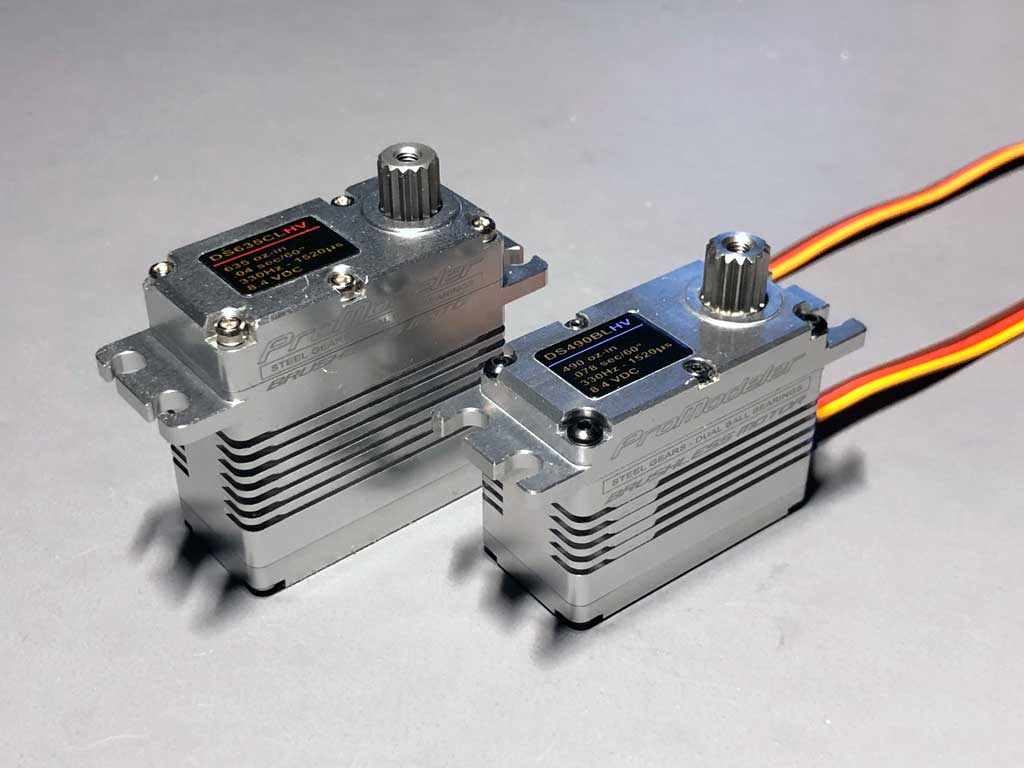
Perhaps you noticed the beefy 15T spline (ø8mm). Reason we went to this is because servos have become so powerful with the new class of neodymium magnet motors that 25T splines were twisting under the loads. Even using the best steel in the world, they just aren't holding up in some applications!
Eyeball this brief article showcasing the process of gear repair for our conventional DS505BLHV, a 500-oz class standard equipped with conventional 25T spline output shaft (ø6mm), to better grok what we mean.
Anyway, we resolved the shafts twisting under extraordinary loads by turning to our +2685oz-in quarter-class servos and borrowing the gnarly spline off those. This sorted the issue.Totally.
Here's a nice comparison photo showing how they look side-by-side.
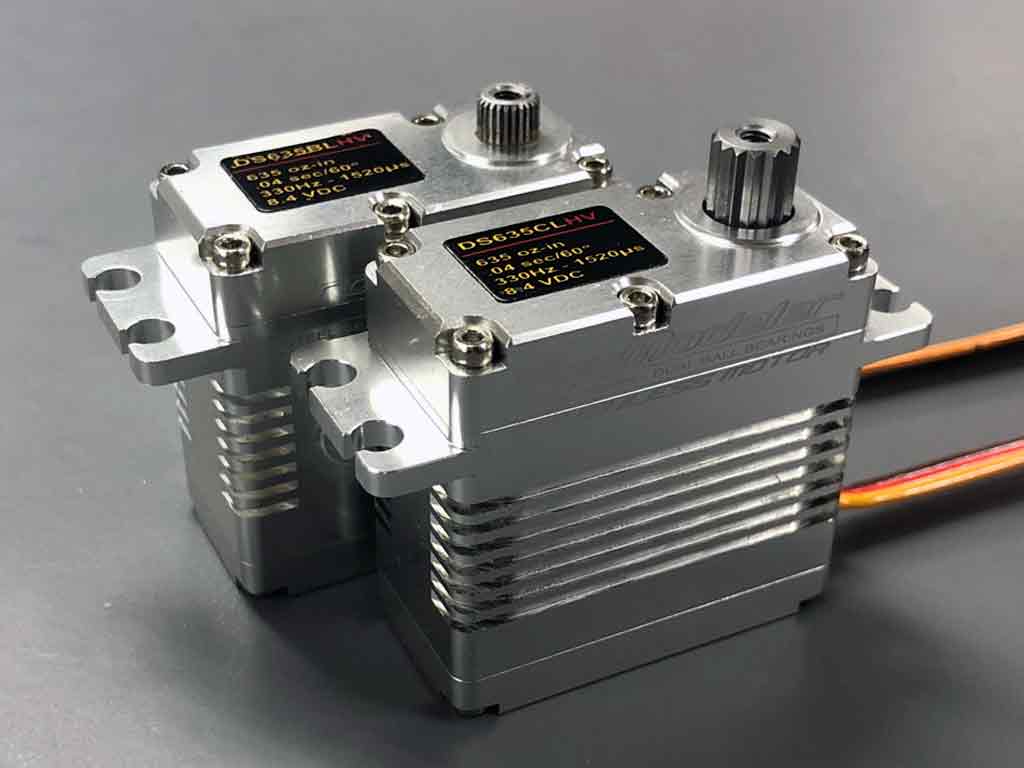
- Conventional 25T output spline versus gnarly 15T super duty

Naturally, you're probably wondering about available servo arms, right?
Servo arms
We've got you covered with a nice assortment of 15T spline servo arms. As usual, clicking the link opens a new browser page so you don't lose your place here. The arms range in length from 1" (25mm from center) through monster 60mm long arms (2-3/8"). We even offer them in double-side configurations like this one.
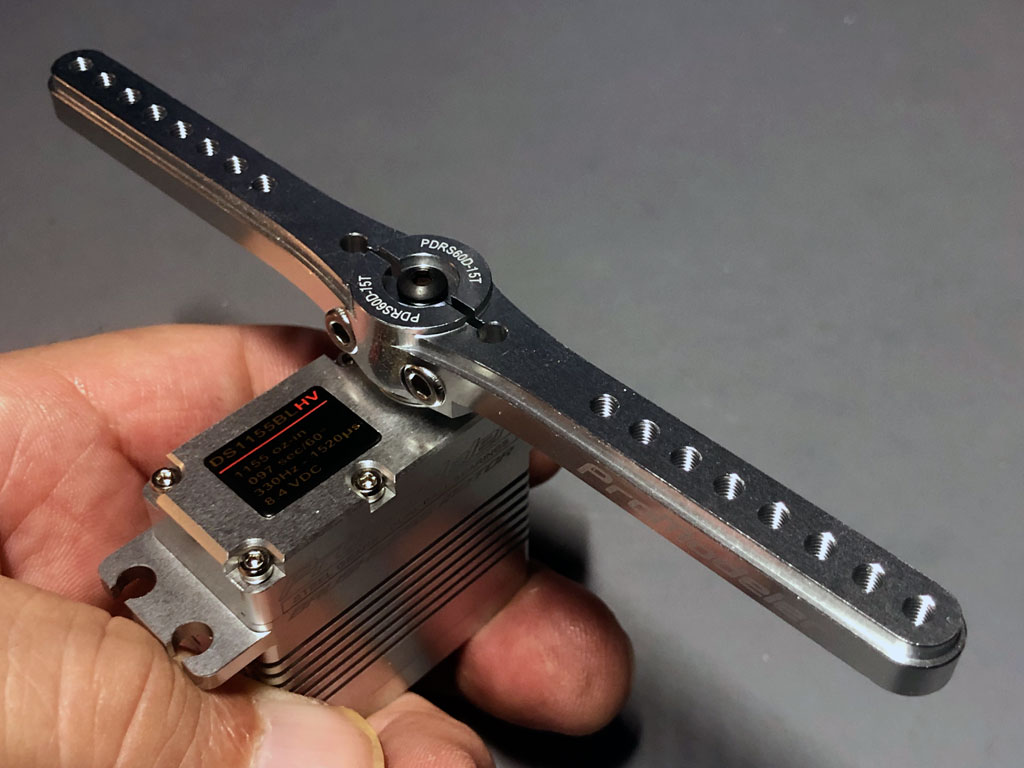
And take note, these are threaded for M3 hardware and we CNC-machine them from a solid billet of 7075-T6 aircraft aluminum. Plus, they're beefy enough to make double nutting the ball screw a thing of the past!
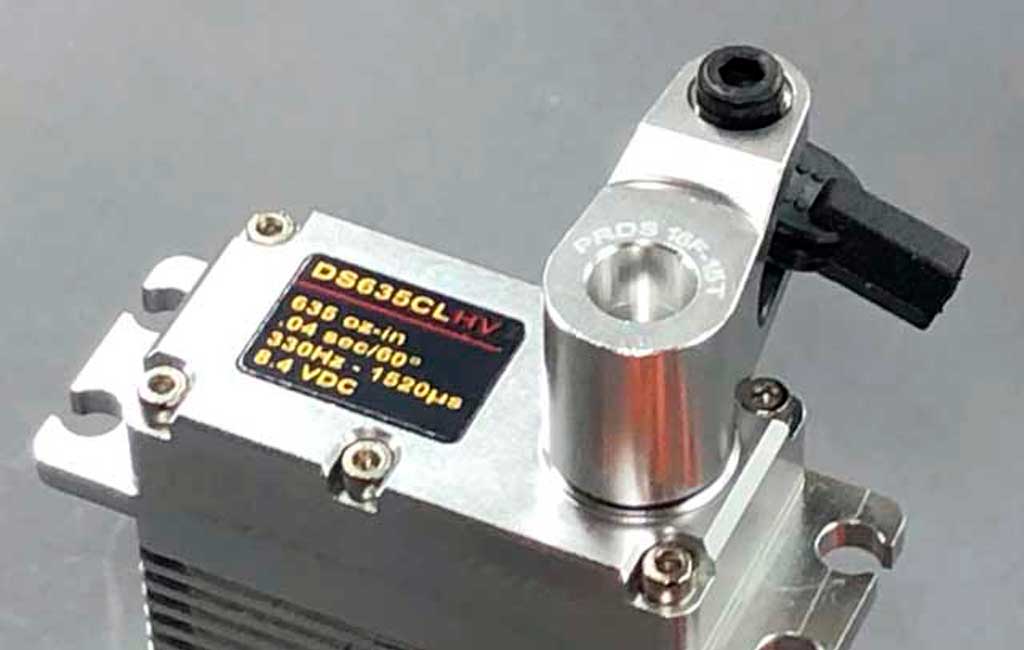
Furthermore, we also produce several fork arms (where the ball link is captured top and bottom).
Model numbers
If you're wondering what our servo model numbers mean . . . you don't need a decoder ring, it's actually something understandable in English;
- DS = Digital servo
- xxx = torque rating in oz-in
- BL - Brushless motor
- HV = High Voltage (to 8.4V)
Moreover, part of what makes a DS465BLHV better than what our competitors offer you (beyond torque and speed) is unlike hobby-grade servos, it's built to meet military standards (and subjected to these tests).
MIL-STD-810G-Part 16
- Shock - Test Method 516.6
- Vibration - Test Method 514.6
- Rain - Test Method 514.5
Bottom line? When it comes to servos . . . they aren't built any better by anybody on this planet!
Basic specs (open the specifications tab for the detailed specs)
- 465oz-in of torque
- 0.102sec/60°
And with regard to how the internal build qualities compares? It'll be hard to figure it out because our competitors don't disclose how theirs are built (meaning by showing photos of their guts like we do). But maybe this photo will clue you in regarding how ruggedly built ours are because we don't hide what you're actually getting by only showing you a pretty outside.
After all, as it turns out, your Mom was right . . . beauty really is more than skin deep!
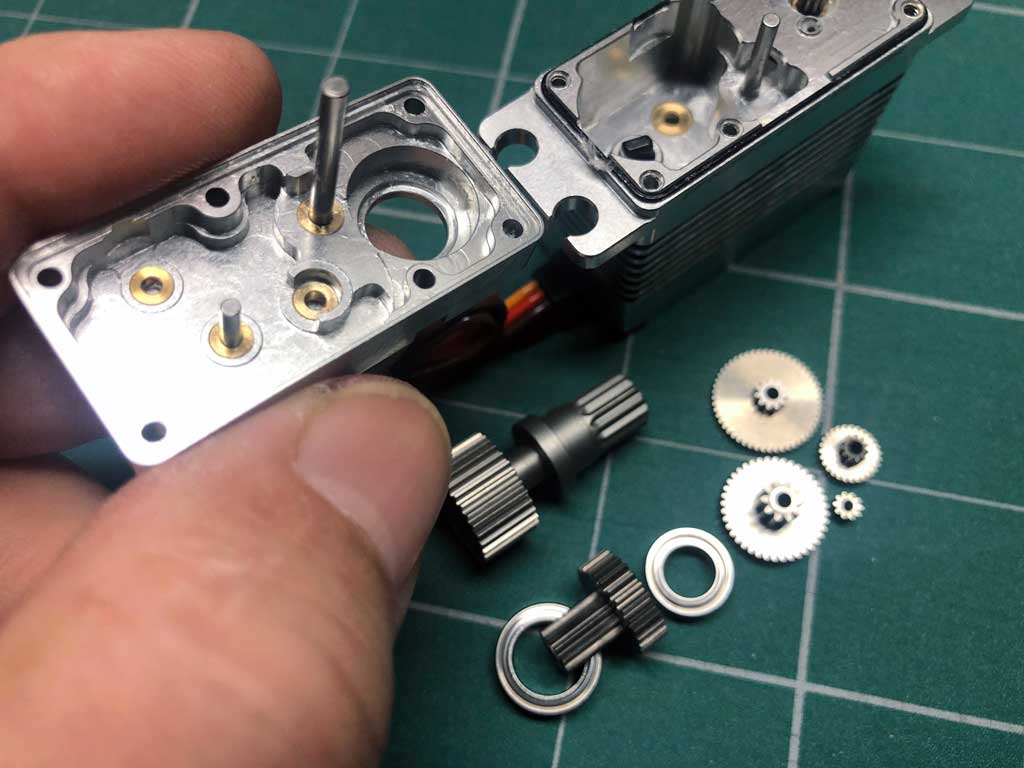
Speaking of beauty, maybe you'll also appreciate the parts making up our servos, which we buy instead of make. These include the best Japanese brushless motor we can lay hands on. If you're unaware, these last 5X longer than competing coreless motors. And if you don't know diddly squat about the kinds of motors found inside servos, review this article to learn more:
Also, your DS465BLHV is equipped with durable all-steel gears (instead of anodized aluminum alloy or titanium). Curious which is better? Well, this really isn't rocket science and you don't even need to be an engineer to realize steel is stronger by a country mile.
Sure, marketing types love using terms which see the inexperienced reflexively reaching for their wallets (like titanium and carbon fiber) but we suggest just using your eyeballs Mk II. This is because if you check out what the money-is-no-object racing teams like Ferrari in F1 or Ford and Chevy in NASCAR rely on, their transmissions use all-steel gears - just like ProModeler.
To this add dual ball bearings plus the world famous Japanese Noble 1mc potentiometer for superb centering.
Magic
So where's the magic in this servo? It's in the design of the gear train that allows us to stuff much larger gear surfaces into a standard size footprint because all things equal . . . bigger is better when it comes to gears.
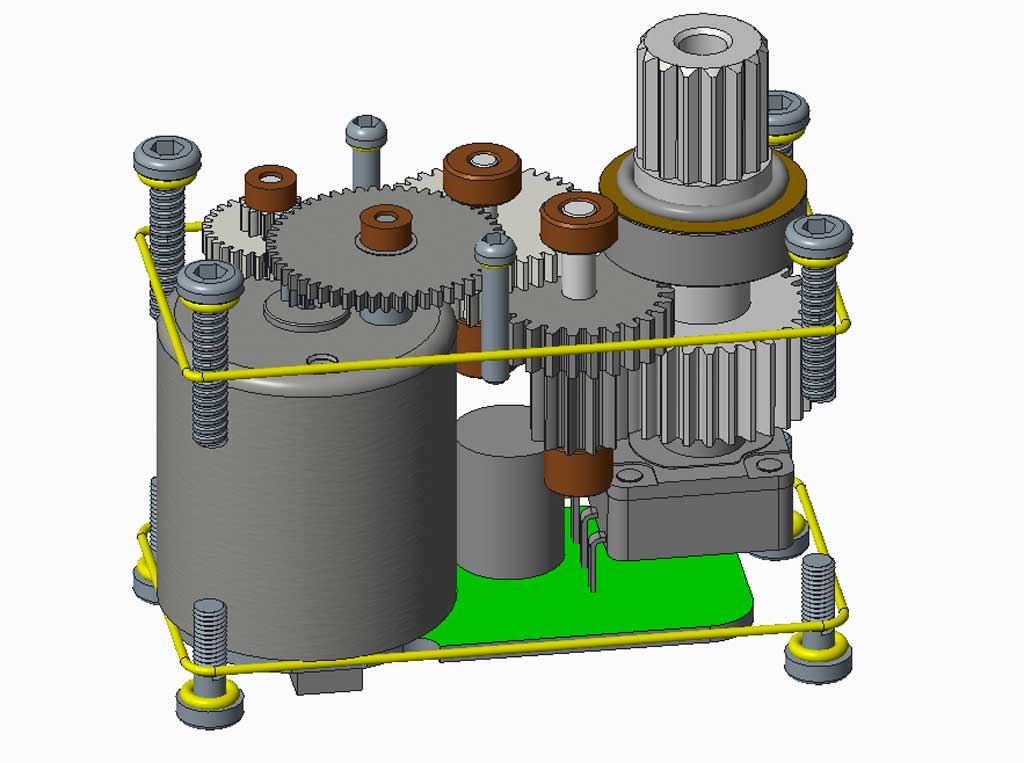
- Yellow are o-rings and the bronze bits anchoring the gear shafts in the alloy are shown in brown.

Servos are not designed for people to zing-zing them back and forth using a servo arm. Doing this may damage the gear train. Reason being, the transmission is comprised of gears designed to take the force of a weak motor, multiply it many times until we get to the final drive ratio. Way it works is individual gears are designed so that a small pinion drives a larger bull. This happens in a ratio ranging from 1:3 to 1:6 through a series of combo gears to reach the final ratio, which can vary from 1:150 to over 1:500.
Thus, grabbing the servo arm and moving it back and forth isn't just driving it backwards at 3:1 or 6:1, but far worse because you're really driving the servo motor through the entire transmission's gear ratio, which for the DS465BLHV is 380:1. Means the risk is you're going to break something if you persist!
Note1; that you do it all the time with other servos is your business, but you shouldn't. Anyway, with our servos it becomes our business 'if' you ask for warranty. Reason being, once we see the teeth have been damaged (and we will), then because the servo cannot drive the gears enough to drive damage them, this means the damage came from an external force input, e.g. you grabbing the servo arm and moving it back and forth. Since we're not stupid, it's not a warranty issue.
Note2: gently moving them, e.g. returning a control surface back to center, or when folding a helicopter's main rotor blades into the holder won't damage anything.
Bottom line? If you like to zing-zing the servo back and forth using the servo arm, don't. Stop driving servos backwards, they're not meant to be driven externally! Not ours not anybody's.