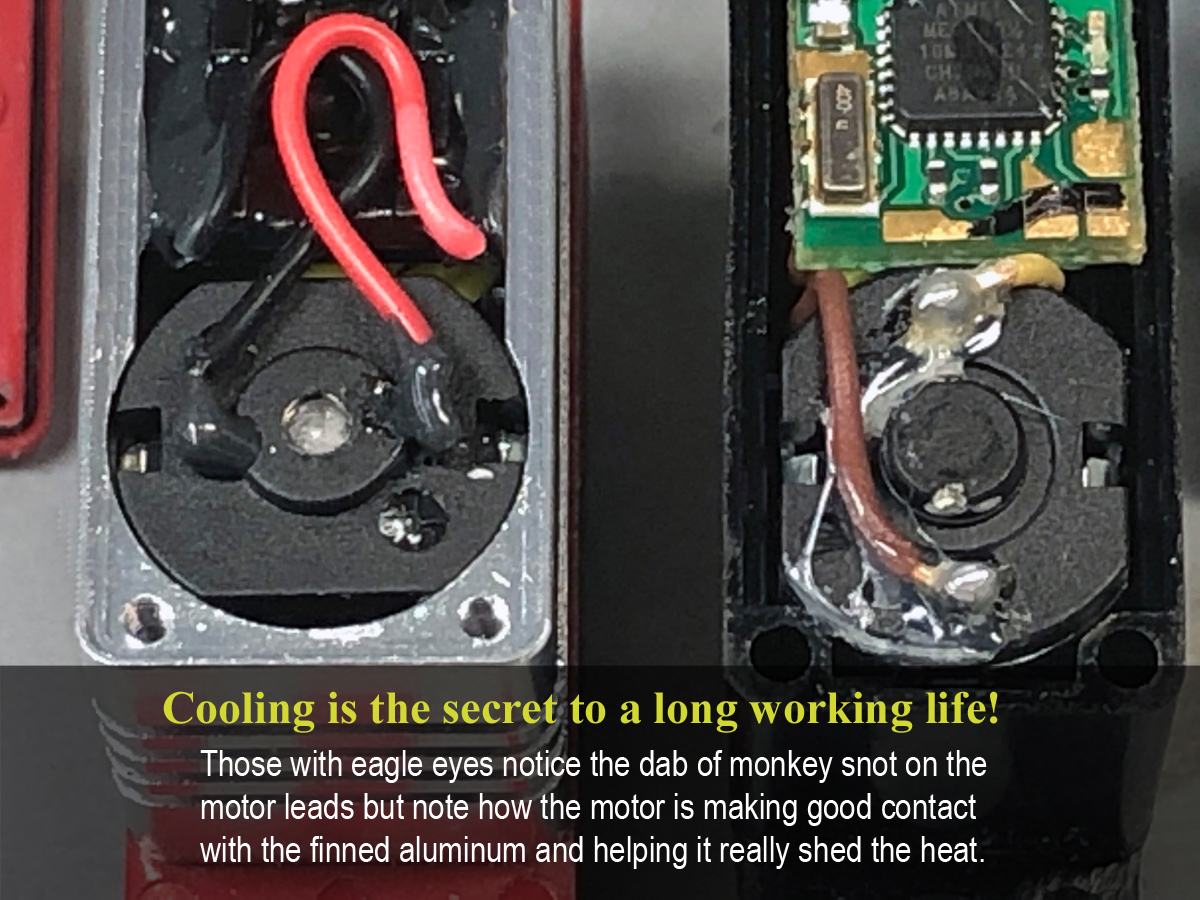
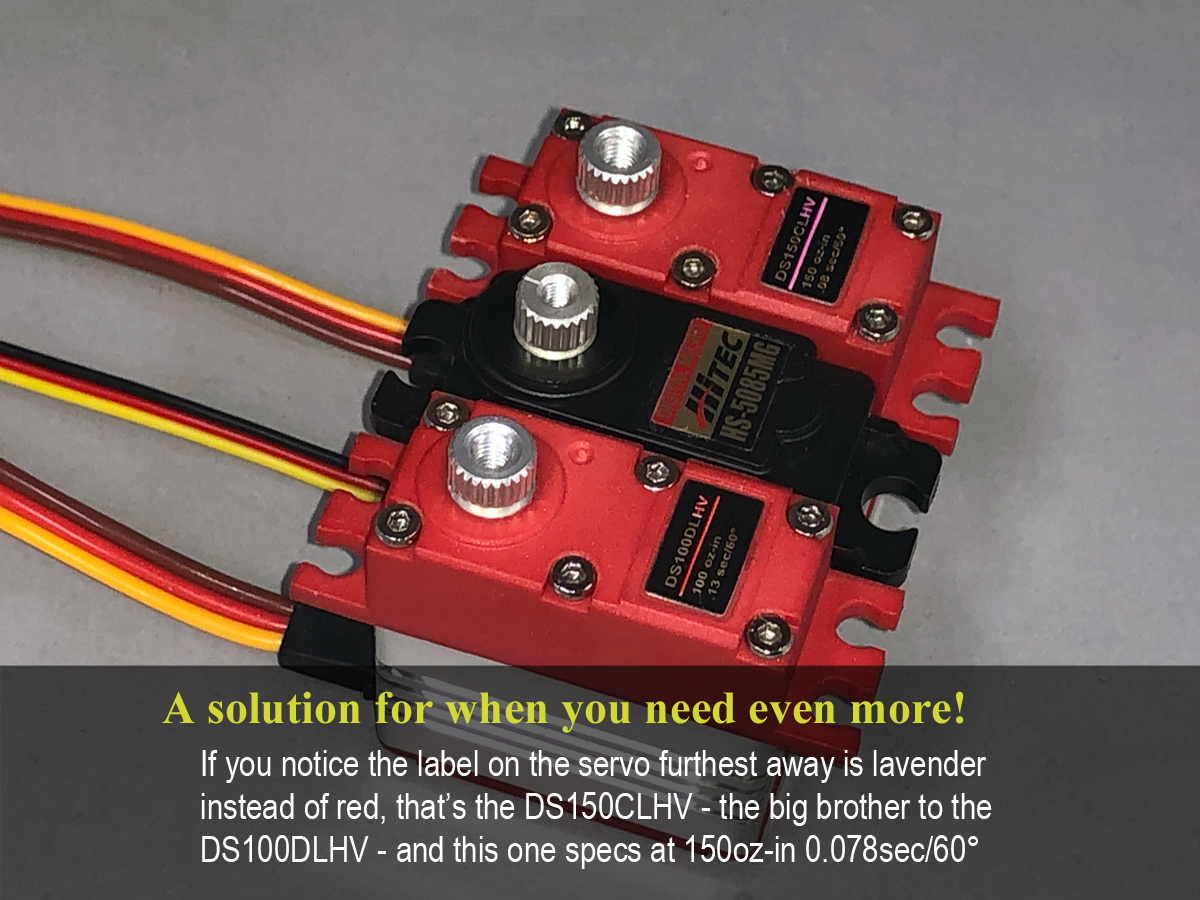
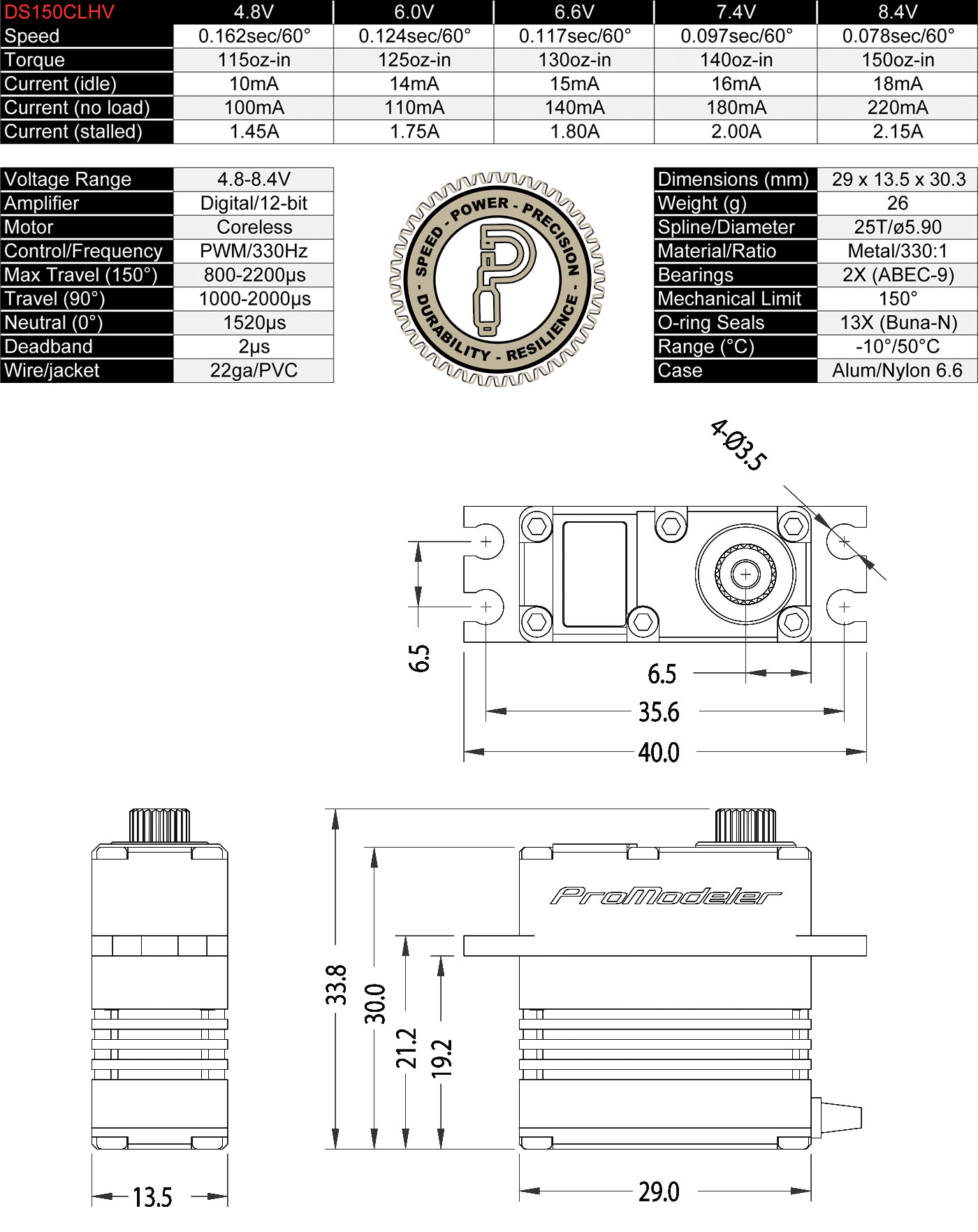
The DS150CLHV is basically the same as the DS100DLHV except in the motor selection, which leads it to have about 50% more torque and be about 2X as fast. Consequently, it carries a modest price premium for the added performance.
In all honesty, 99% of modelers are served perfectly well by the less costly DS100DLHV - but without question - there are some amongst you for whom the added performance of the DS150CLHV makes the difference when you're performing 3DXA maneuvers and especially when you're flying SPA-class model like a Tiger Tail, Phoenix 5, or Kwik Fli. We created this servo for you as well as folks flying high performance like an Extra, Edge, Slick, and YAK.

Note:
These are tiny servos with even tinier gears and operating them manually via the servo horn may damage them. This damage is not covered by warranty. Please do not treat these like a standard size servos. You've been warned. Also, operating voltage is 4.8-8.4V, but optimal performance is obtained with a 2S LiPo instead of a BEC. This is because LiPos deliver the required current without voltage spikes, noise, or otherwise adversely affecting the delicate avionics (15C or better is recommended). After all, synthetic orange colored Tang may have gone to the moon, but it doesn't compare to freshly squeezed orange juice. Same thing when it comes to feeding your avionics!
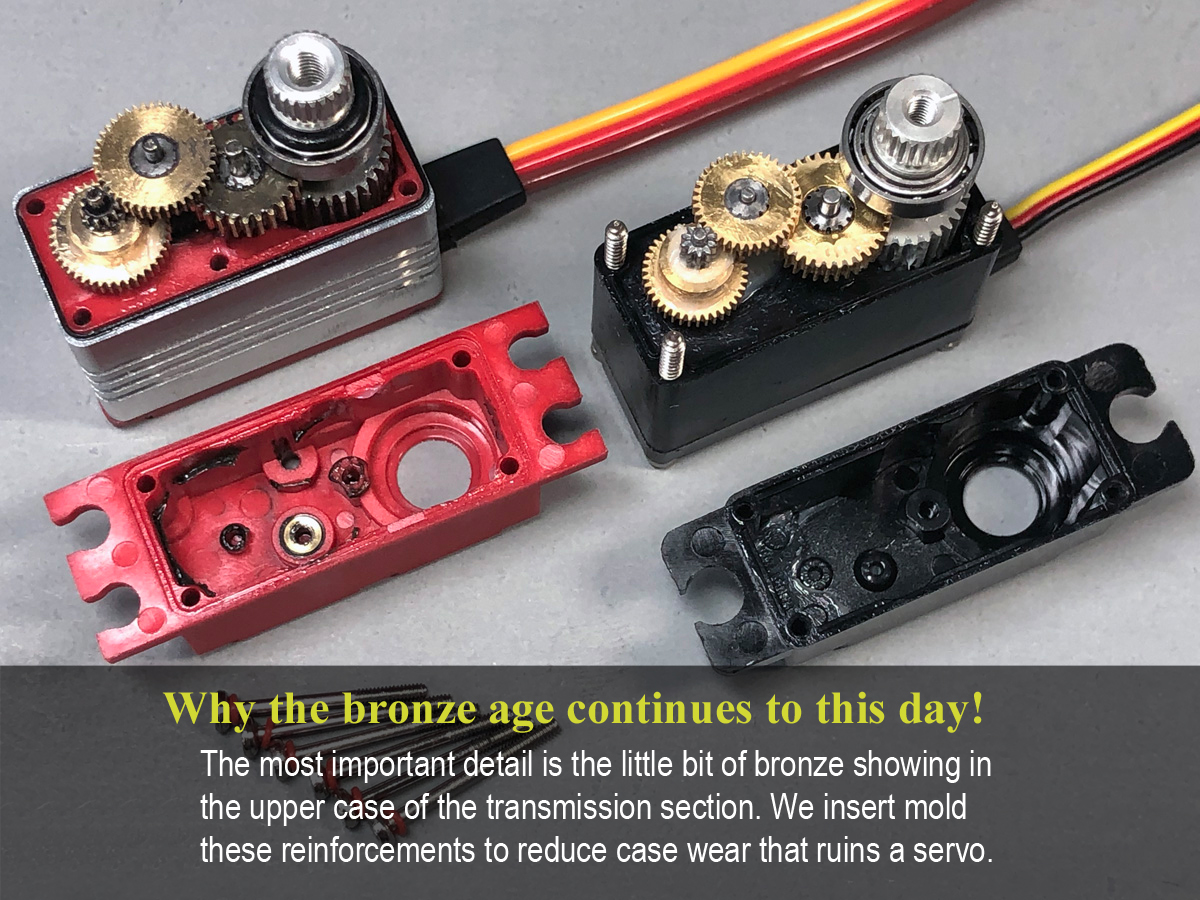
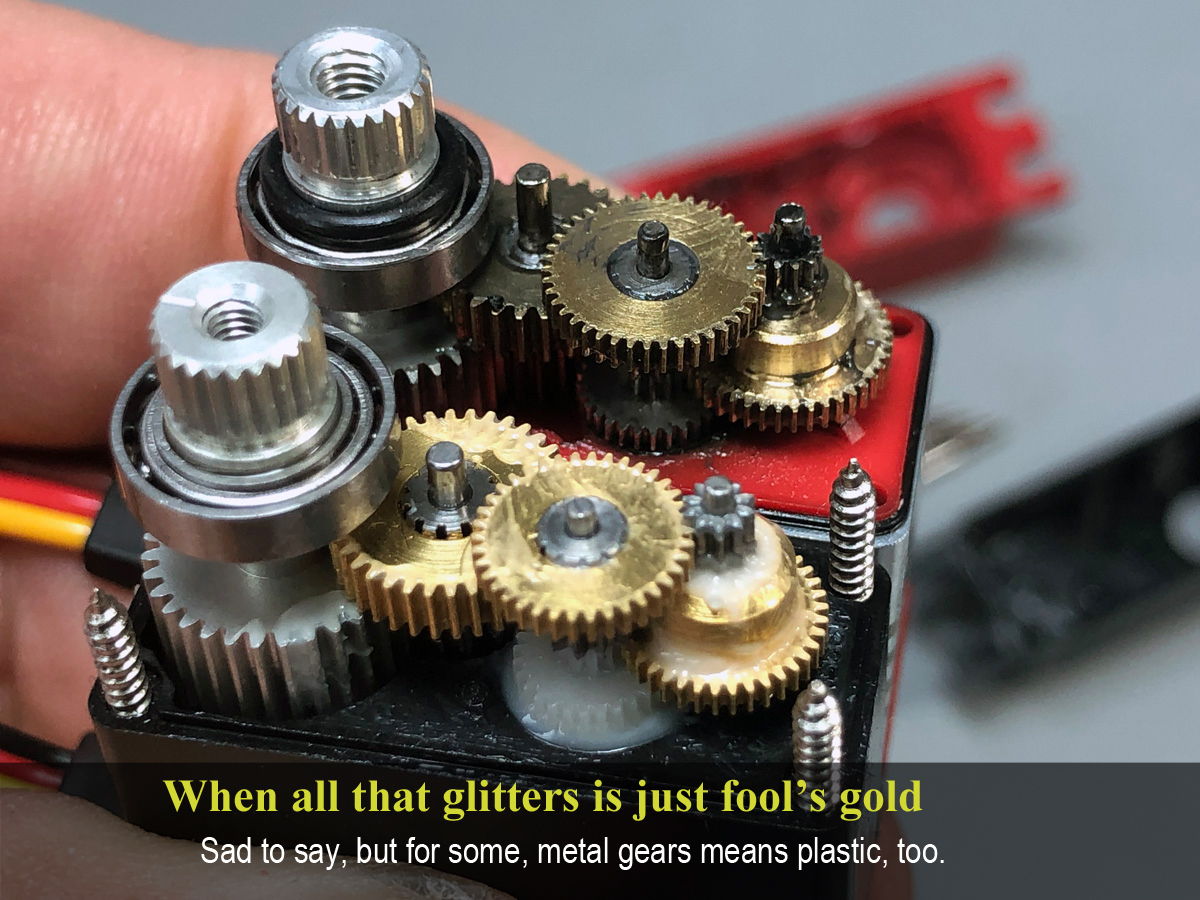
Servos are not designed for people to zing-zing them back and forth using a servo arm. Doing this may damage the gear train. Reason being, the transmission is comprised of gears designed to take the force of a weak motor, multiply it many times until we get to the final drive ratio. Way it works is individual gears are designed so that a small pinion drives a larger bull. This happens in a ratio ranging from 1:3 to 1:6 through a series of combo gears to reach the final ratio, which can vary from 1:150 to over 1:500.
Thus, grabbing the servo arm and moving it back and forth isn't just driving it backwards at 3:1 or 6:1, but far worse because you're really driving the servo motor through the entire transmission's gear ratio, which for the DS150CLHV is 330:1. Means the risk is you're going to break something if you persist!
Note1; that you do it all the time with other servos is your business, but you shouldn't. Anyway, with our servos it becomes our business 'if' you ask for warranty. Reason being, once we see the teeth have been damaged (and we will), then because the servo cannot drive the gears enough to drive damage them, this means the damage came from an external force input, e.g. you grabbing the servo arm and moving it back and forth. Since we're not stupid, it's not a warranty issue.
Note2: gently moving them, e.g. returning a control surface back to center, or when folding a helicopter's main rotor blades into the holder won't damage anything.
Bottom line? If you like to zing-zing the servo back and forth using the servo arm, don't. Stop driving servos backwards, they're not meant to be driven externally! Not ours not anybody's.
You're busy, we get it. In this section we cut to the chase.